
Gaithersburg City Directory Collections
No master run of Gaithersburg city directories appears in the official sources. That gap is real. It does not mean editions never existed. Start with the Montgomery County Public Libraries catalog. Maryland State Archives, the Library of Congress, newspaper archives, and family-history catalogs follow. Search Gaithersburg alongside Montgomery County, Rockville, Washington Grove, Germantown, Montgomery Village, old street names, and the exact address. The title page matters most. Save it, or the full catalog record, before recording any publisher or year.
| Collection lead | Verified date coverage | Where to check | Access route |
|---|---|---|---|
| Gaithersburg directory editions | Exact editions not located | MCPL catalog and branch research help | Catalog, branch, Ask-A-Librarian |
| Montgomery County directory leads | Exact editions not located | MCPL, MSA, and LOC catalogs | Catalog record or repository staff |
| Digitized local-history material | Collection-dependent | Montgomery History Digital Collections | Online subset, then research request |
| Newspaper and family-history leads | Title-dependent | Chronicling America and FamilySearch | Online search; check provenance |
Never guess a publisher, a year span, or a final print year. A guess poisons the record. Treat a Gaithersburg directory entry as usable only when its title, edition, repository, and date trace back to a catalog record. It can also rest on a scanned title page. The same rule covers telephone books, street lists, and business directories. Anyone can type a plausible date. Only the source can support one.
Note: A search-result snippet is not enough to establish a Gaithersburg directory edition. An unsourced family-tree entry falls short too.
Gaithersburg Directory Catalog Checks
Start with MCPL. Its research gateway brings catalog searching, newspaper resources, genealogy databases, and Ask-A-Librarian help into one place. The MCPL research and genealogy gateway matters most when a catalog title points to a database. That database may require a card or a branch visit. For each promising record, write down the title, author or editor, publication place, publisher, edition, year, and physical description. Add the call number, holding branch, digital link, subject terms, and availability status too.
A catalog search may come up empty. Instead of guessing, rotate subject and place terms until something surfaces. Interlibrary loan and Ask-A-Librarian are documented fallbacks that Montgomery County libraries support. The Gaithersburg Library serves as the local access point for branch services, the catalog, and research help. Its branch page lists the address as 18330 Montgomery Village Avenue. It also lists current hours and contact details worth confirming before any visit.
This discipline pays off for city directories. A catalog entry might describe a holding record. It might describe a reprint, a mere catalog reference, or a scan with only a few pages. None of those forms guarantees a complete run. The Gaithersburg Library branch page remains the practical starting point. It anchors this kind of residents directory research.
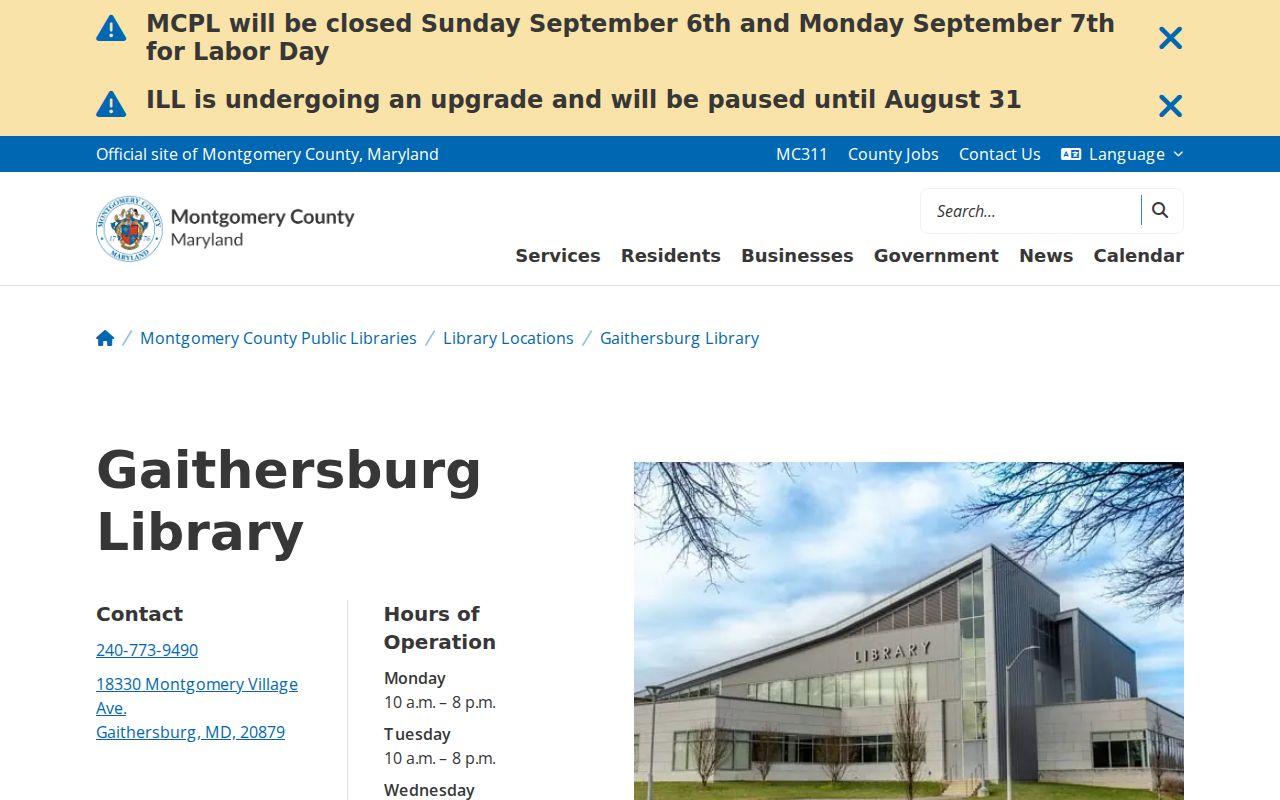
Use the branch and the catalog together. The branch page identifies a service location, while the catalog or a librarian establishes whether a specific historical volume is truly at hand.
Montgomery History Directory Context
The Montgomery History Digital Collections supply a different kind of evidence. A dated image grounds a directory hit. So can a map or an oral history. A periodical works too. So does a collection reference pulled through its Digital Maryland links. The organization also keeps county government records and civic-group records. Its holdings include personal papers, photographs, and maps. Manuscripts, audiovisual items, and periodicals round out the collection. Those holdings help identify the institution, street, or event behind a printed entry.
Research access is in transition. Montgomery History reports that a full-collections move affects service and can limit remote digital work. Ask first. Its research services page documents remote research, scanning, page limits, prepayment, and estimate approval. The page favors focused requests over broad ones. Give the name, the address variant, the date range, and the desired collection.
For any image from a historical repository, preserve the caption. Keep the collection name, date, and rights statement. Save the repository and stable item link too. An address or a face in a caption is one source. It is not identity proof. The Montgomery History collection page remains the source for this view of its digital material.
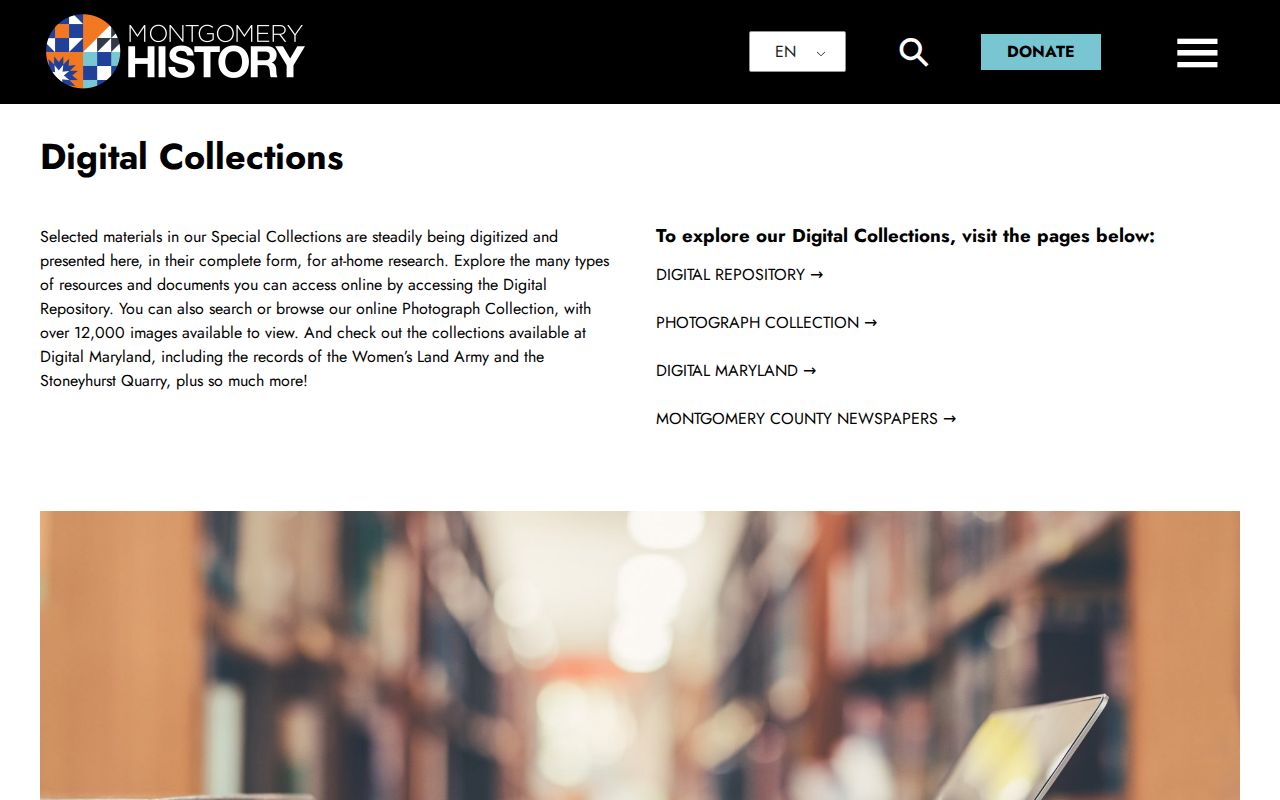
Digital collections can back a city-directory citation. Keep the volume, page, and repository visible in the final research notes.
Gaithersburg City Directory Fallbacks
When MCPL comes up empty, move outward through the named repositories. Do not assume the trail is cold. The Maryland State Archives is the archival fallback. It covers state and county series, land records, equity indexes, and older vital-index referrals. Its Guide to Government Records and its reference staff beat a broad web search for any particular series. For printed matter, the Library of Congress catalog and Chronicling America deliver title metadata and historic newspaper pages.
FamilySearch may surface an index or an image. Save the collection title and the original repository. Save the batch or image reference and any access restriction. A user-contributed tree is not confirmation. Newspapers often repeat a historic address or postal label. Pair the notice with a directory page, a plat, a deed reference, or GIS context. Label and reality can drift. Only then convert an old label to a present-day street.
Research tip. Search both a name and an address, then preserve the older spelling, route label, or town name before trying to normalize it.
Reading a Gaithersburg City Directory
A Gaithersburg city directory page is a printed record. It covers one edition only. It is not a current profile of anyone, so read it that way. Note the spelling the printer used. Note the initials, any printed role, and the street or business number. Also worth capturing: the town label, household notation, business name, advertisement, page, publisher, edition year, repository, and scan link. Some Gaithersburg volumes arrange names. Others arrange streets or businesses, and some mix approaches. Check the front matter and the page image before assuming how the index works.
| Printed name | Preserve surname, initials, suffixes, and spelling exactly as the edition shows them. |
|---|---|
| Address wording | Record number, street, route, town label, and any business location without silently modernizing it. |
| Role or organization | Capture a printed civic, business, or other role as historical metadata, not as a current claim. |
| Edition citation | Keep title, publisher, year, page, repository, and image or catalog link together. |
- Criss-cross directory
- A street-order arrangement that can place printed entries under an address rather than under a surname, if the verified volume includes one.
- Householder index
- An index organized around the person or household named in the publication; its exact scope depends on that edition.
- Abbreviation key
- The volume's own explanation of shortened labels. Photograph or transcribe it before interpreting a compact entry.
One line in a directory proves very little. Do not infer ownership, a family relationship, or continuing presence from a single entry. A directory can show what was printed at a particular time. It cannot settle every question about a Gaithersburg person or property. So treat it as one clue among several.
Gaithersburg Directory Citation Trail
Good directory work leaves a trail. Another researcher should be able to find the same Gaithersburg page from your notes alone. Start with the catalog title and the holding location. Add the publication place, publisher, edition or issue date, page number, and the repository or scan URL. If the page came from a database, note the database name and your access date.
Keep older street forms separate from modern ones. Record the source form as printed, then add a normalization note in its own field. That separation protects the record. It also keeps a later researcher from mistaking a modern map label for what the historical source actually said. A catalog record, a newspaper mention, a plat, and an address result each carry their own dates and purposes. Keeping those distinct makes comparing them go more smoothly.
Note: Preserve old spellings and postal labels as quoted text. Document any later geographic interpretation in a separate field.
Trace Gaithersburg City Directories
Once a catalog-verified edition is in hand, Gaithersburg city directories can trace a historical household. They fill the gaps between federal census releases. Begin with the earliest confirmed appearance. Then work forward edition by edition, recording address changes and differences in name form. When a street-order section exists, treat it as another index into the printed page. It is not proof about the whole block. Pair each edition with other records that carry their own dates and purposes.
- Find a title, page image, or catalog record that establishes one exact edition.
- Transcribe the printed name, address wording, date, page, and repository before searching a later edition.
- Compare the next verified edition for a move, spelling change, organization change, or disappearance from print.
- Pair the time period with the appropriate census, newspaper, plat, deed, or archival collection reference.
- Mark any gap as unresolved instead of converting a missing entry into a conclusion.
A name that vanishes from a Gaithersburg city directory may reflect a move, a changed name form, a new publishing practice, or simply a volume still waiting to be found. Modern address-keyed records are handled separately in the Gaithersburg By Street directory.
Gaithersburg City Directory Limits
City-directory work is strongest when its limits stay visible. Exact Gaithersburg publisher and year runs need catalog confirmation. A record may describe a holding with no scan. Montgomery History's access conditions can change during its collections move. The current official city route for particular municipal records also needs confirmation. These are reasons to record source and access dates. They are not reasons to guess.
Use historical listings for genealogy, local history, and careful property or institution research. Never use a historical Gaithersburg entry to track or harass a living person. For a current identity question, compare only the official record appropriate to that question. Respect restricted or confidential material.